
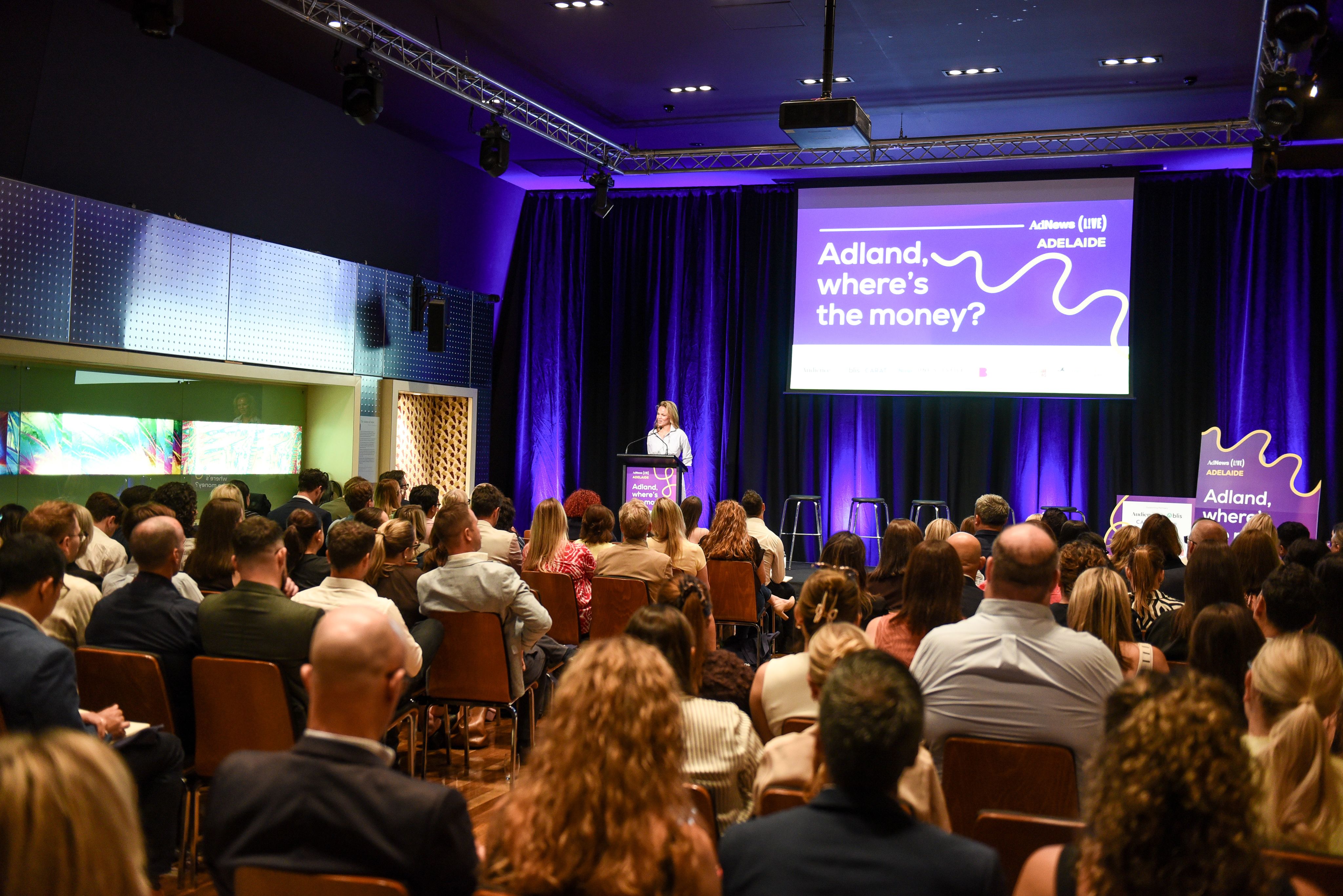
Adland, where’s the money?
From economic shocks to media spend battles and marketing strategy overhauls, AdNews L!VE Adelaide explored where the money is — and where the industry goes next.






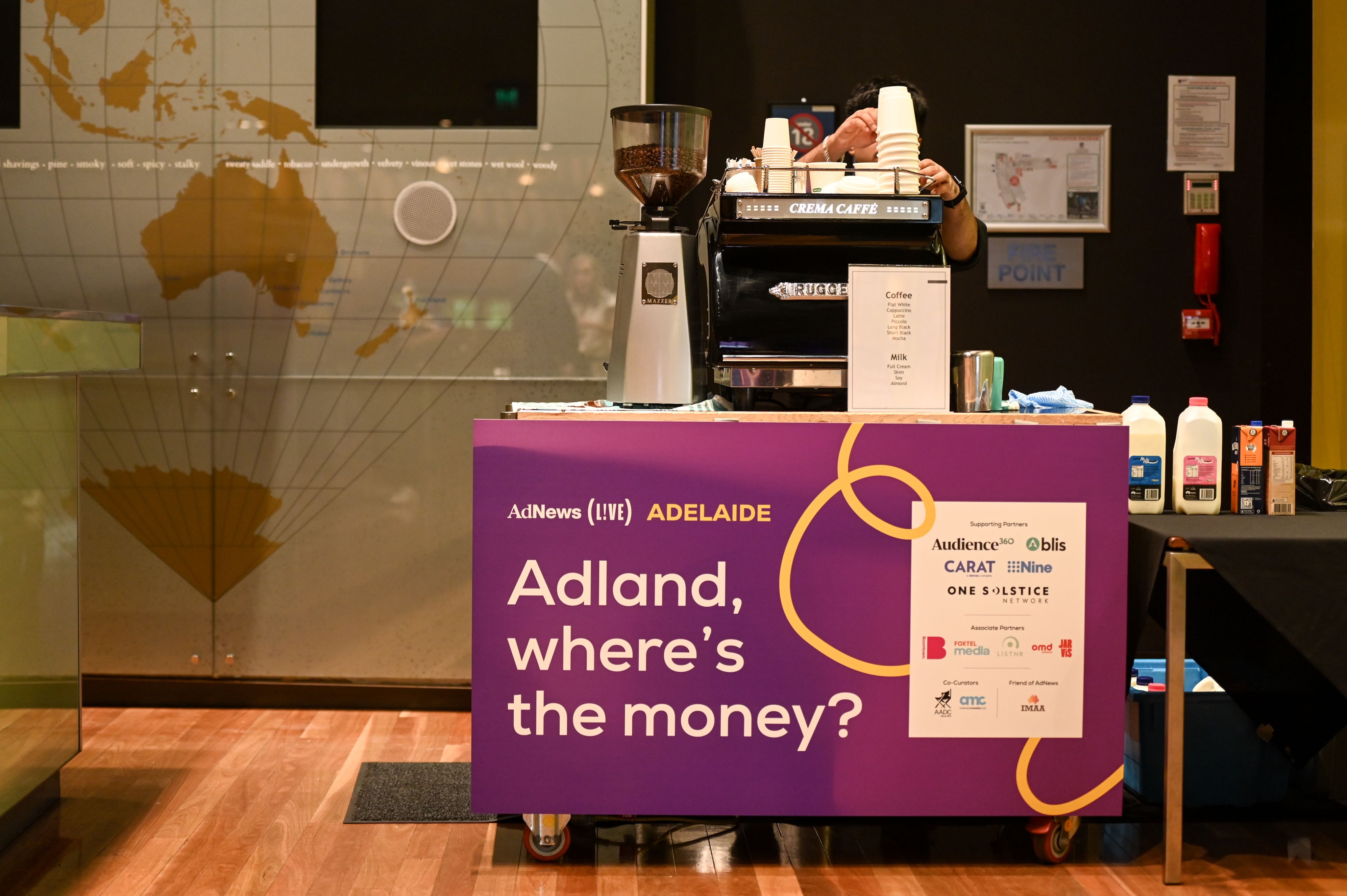
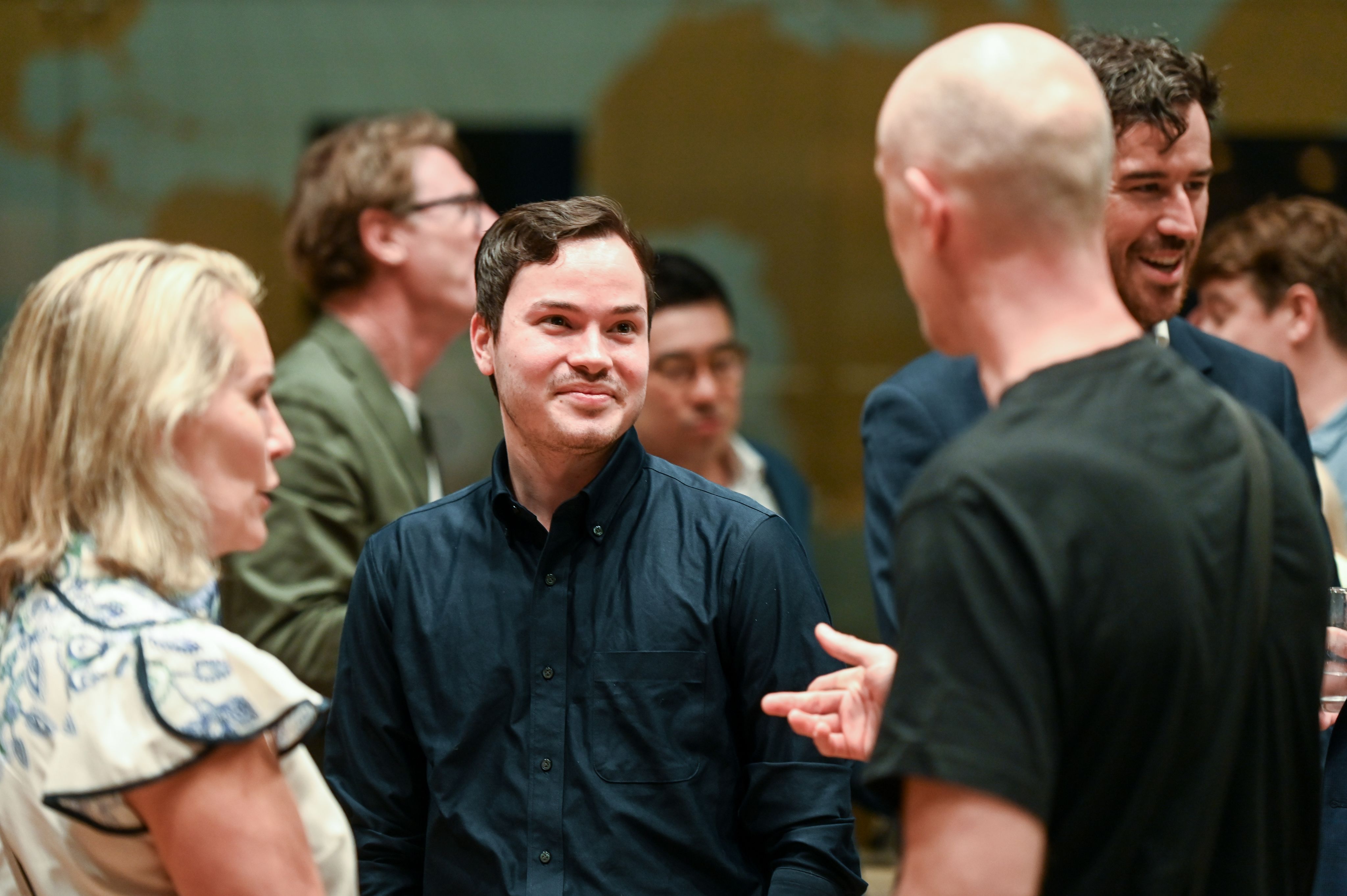
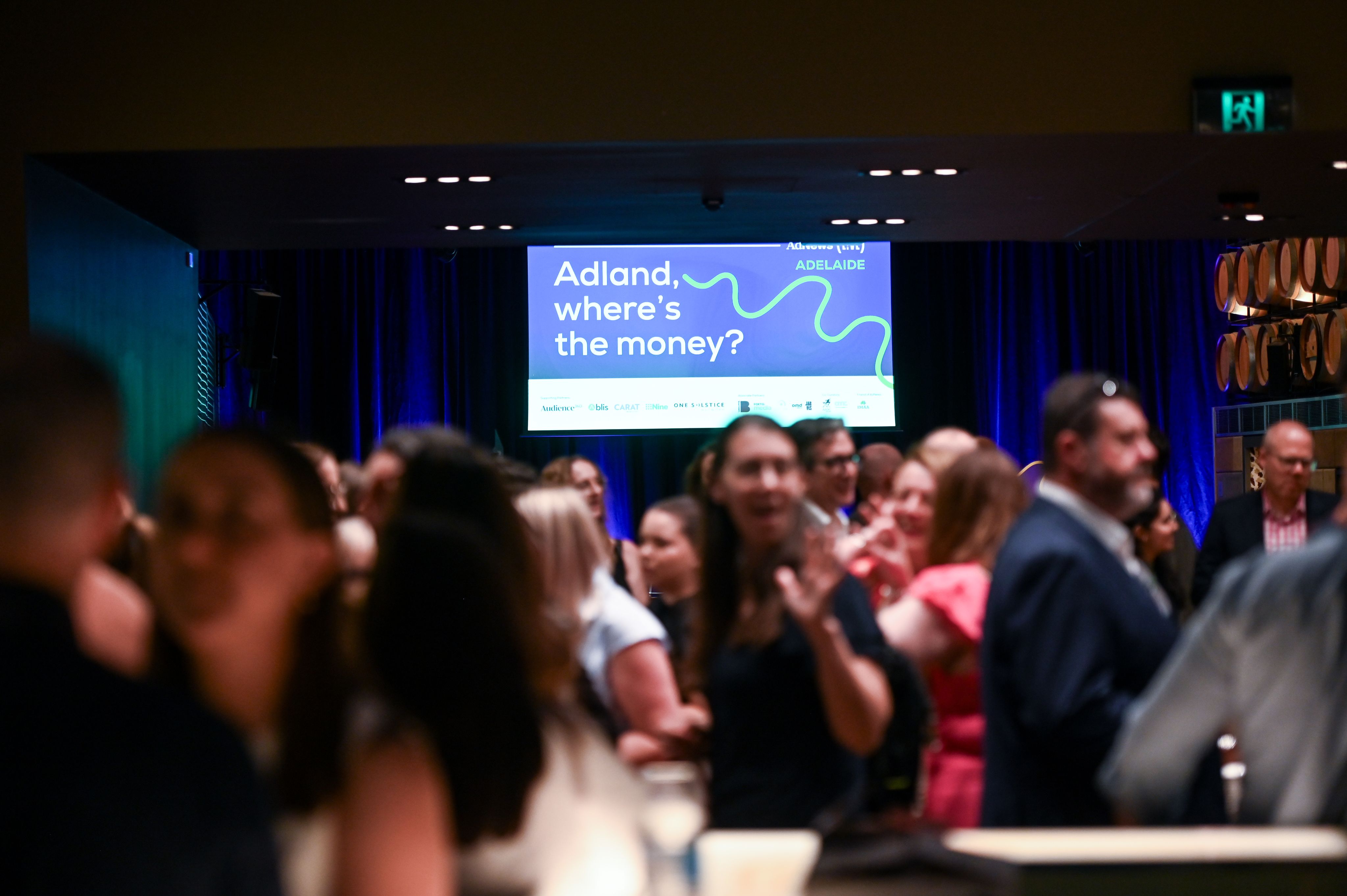

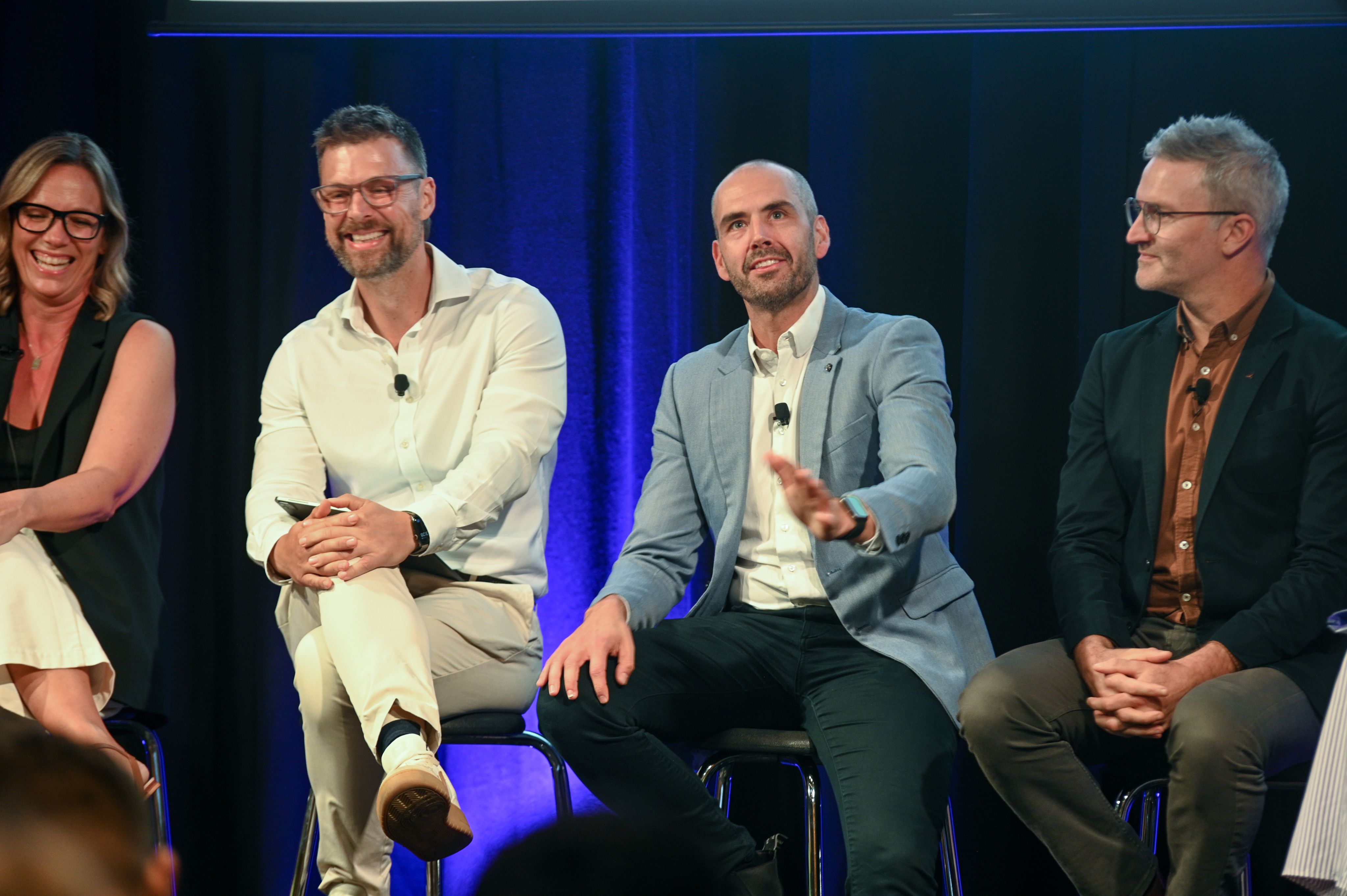
“Australia is most sheltered from global turbulence - I actually can't think of a country better positioned with greater economic potential.”
David Robertson, Bendigo and Adelaide Bank chief economist

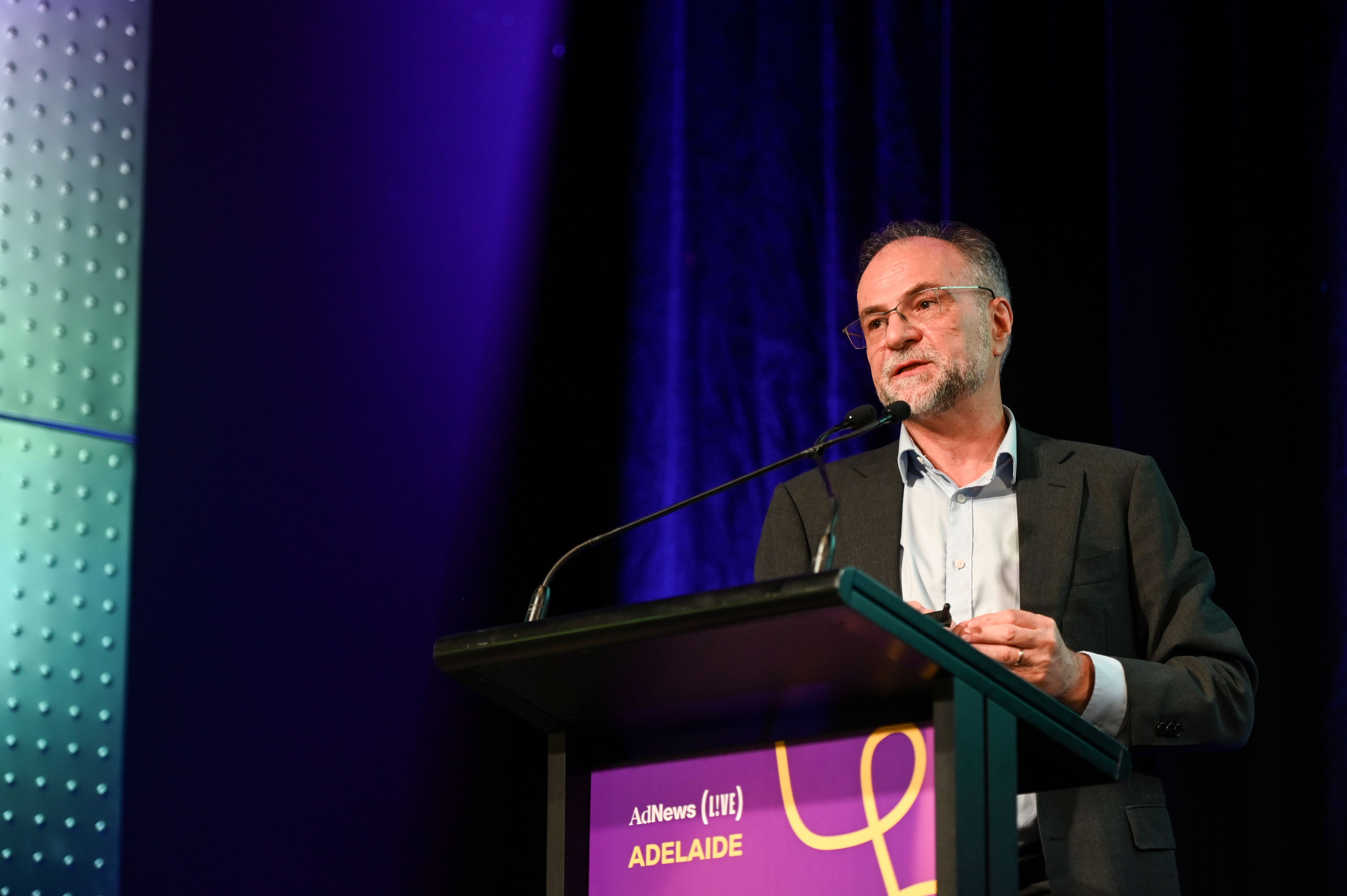
The Economic Roadmap: where to next?
Bendigo and Adelaide Bank chief economist David Robertson
David Robertson’s outlook landed on a tension that matters directly to brands: the economy is strong, but increasingly constrained — and that changes how growth shows up.
On paper, the fundamentals are hard to argue with. Unemployment sits at 4.2% nationally, even tighter in South Australia at ~3.7%. Household wealth continues to build, with $4.5 trillion in superannuation, and Australia ranks as the second wealthiest country globally per adult.
But that strength is now colliding with pressure points. Inflation is tracking back towards 4–5%, the cash rate has already risen to 4.35% with another hike likely, and growth is expected to moderate to ~2.2% (with downside to 1.8%).
For marketers, this is a very specific kind of environment: consumers still have jobs and assets — but feel squeezed. That typically results in more selective spending, not a full pullback. Discretionary doesn’t disappear, but it becomes harder won. Brand, pricing and perceived value start doing more work than pure demand.
Globally, the picture reinforces that caution. Even with conflict in the Middle East disrupting a channel that carries ~25% of global oil and LNG, growth is holding at ~3.1%. Markets have dipped 5–8% but remain near highs. The signal here isn’t collapse — it’s fragility. A single shock now flows quickly into energy prices, inflation and consumer sentiment. For brands, that means planning cycles need to account for sudden swings, not just gradual change.
At the same time, a more structural shift is underway. Robertson’s clearest call was that AI is no longer emerging — it’s now the primary driver of growth. We’re moving from an investment phase into an output phase, with early productivity gains already visible in the US, lifting long-term growth expectations from 1.9% to ~2.1%.
That matters commercially. As productivity lifts unevenly across sectors, it creates divergence: some businesses will lower costs and scale faster, while others lag. For marketers, that gap shows up in pricing pressure, margin expectations and speed to market. The advantage won’t just be in using AI tools — it will be in how quickly organisations convert them into actual efficiency.
Where things tighten is policy. Six months ago, markets were expecting rate cuts below 3%. Instead, Australia is facing further tightening, driven largely by structural inflation — particularly housing, which accounts for 22% of CPI. Property prices in Adelaide alone have risen ~11% year-on-year, with regional areas matching that and farmland up 18%.
This has a direct consumer effect: rising asset values alongside declining affordability. In practical terms, that creates a two-speed audience — asset-rich but cash-constrained. For brands, it’s a difficult mix. Premium positioning can still work, but only when it’s clearly justified. At the same time, value messaging becomes more powerful, even among higher-income segments.
South Australia is, on paper, one of the strongest performing markets in the country — 2.6% growth, the highest nationally, with private sector activity leading. But even here, the same constraint applies. Australia’s effective growth ceiling is sitting at ~2%. When the economy exceeded that, inflation followed.
That’s the core issue: demand is there, but the system can’t keep up.
Until productivity improves, any acceleration in growth feeds back into higher costs — which ultimately flow through to consumers. For marketers, that means the next 12 months aren’t about riding a wave of demand. They’re about competing inside a constrained system where attention, pricing tolerance and conversion are all under pressure.
The outlook for 2026 reflects that. Growth holds at around 2.2%, inflation stays elevated, and rates remain restrictive. It’s not a downturn — but it’s not a release either.
For brands, the implication is clear: this is a market where growth won’t come easily, but it is still there for those who can capture it. The winners will be those who understand the nuance — that consumers haven’t disappeared, they’ve just become more deliberate.
“There's been massive growth in independent agency expenditure into South Australian media, particularly within government and auto categories.”
Jane Ractliffe, Standard Media Index APAC MD and Co-Founder

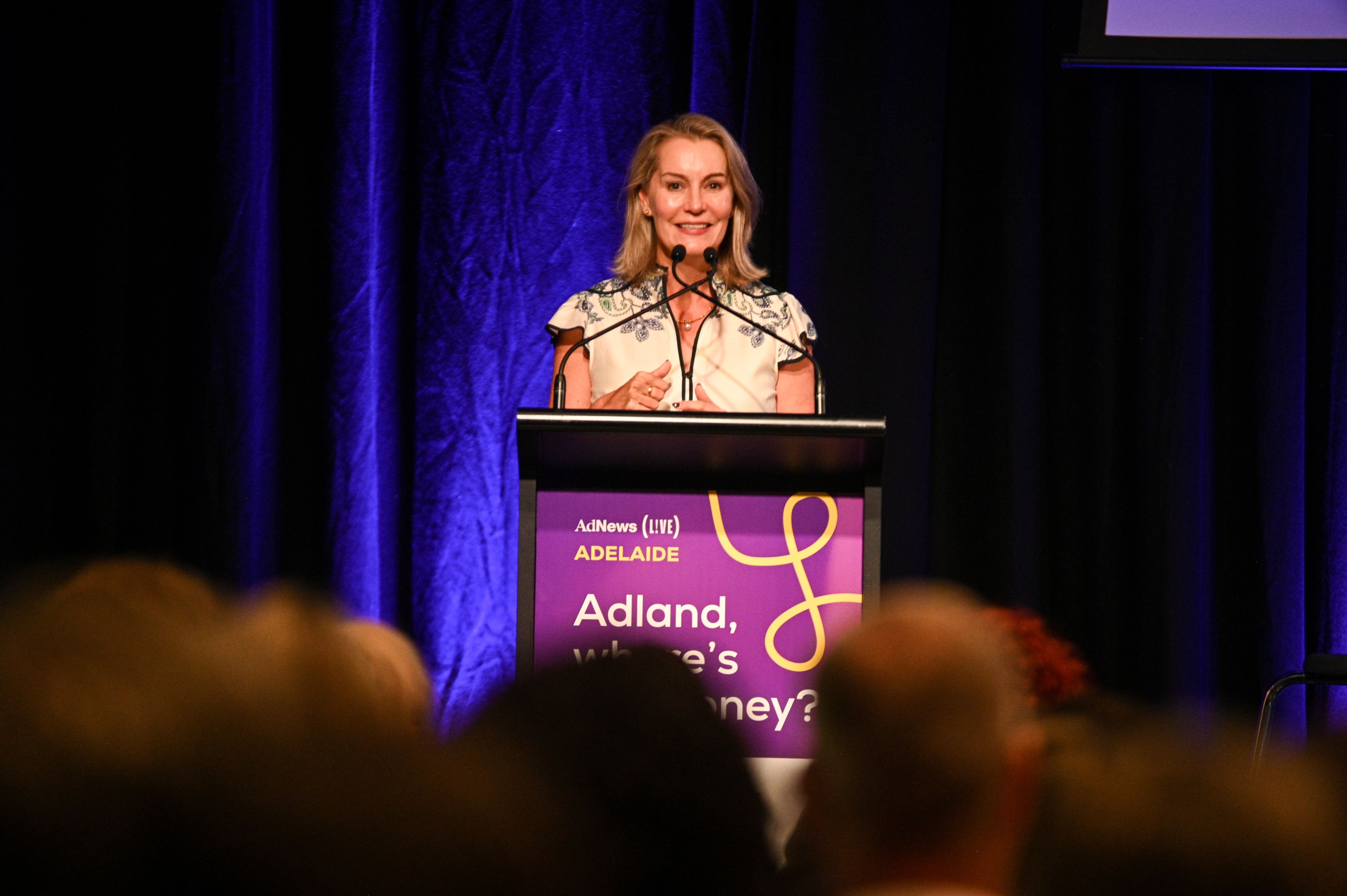
Flat market, shifting money — and a fight for effectiveness
Standard Media Index APAC MD and Co-Founder Jane Ractliffe
Jane Ractliffe’s data cuts through opinion quickly because it’s not modelled — it’s real. Drawn directly from agency payment systems, it shows exactly where money is moving.
And right now, it’s not growing.
Australia’s ad market declined -1.7% in 2025 — extending what has now been multiple years of flat to negative growth. That puts it out of step with major markets like the US and UK, where spend continues to rise despite similar macro pressures.
For marketers, that changes the game immediately: this is not a growth market — it’s a share fight.
Where it gets more interesting is beneath that headline number. Digital, long the default growth engine, is starting to stall. Growth is now uneven, and in some cases reversing:
- Search down 18% (from SA/WA agencies)
- Programmatic declining, after years of expansion
- Social now the largest digital channel, but more due to others falling than its own growth
This signals a clear shift. Performance channels that dominated the last decade are no longer delivering incremental growth at the same rate. Some of that money is being reallocated.
Notably, back into brand.
Streaming video is one of the biggest beneficiaries, with strong dollar growth driven by new inventory from Netflix, Amazon and connected TV ecosystems. But the more surprising winner is outdoor, which grew +6% nationally — making Australia one of the highest outdoor spend markets globally.
In South Australia, that trend is even more pronounced:
- Outdoor spend up +13% (oOh!media) and +18% (JCDecaux)
- TV and digital both declining from local agency spend
- Radio and print relatively stable
This isn’t just a channel story — it’s a signal of intent. Outdoor’s growth is being driven by digitisation, improved measurement (Move 2.0), and crucially, its ability to deliver high-impact, broadcast-style reach in a fragmented media environment.
At the same time, the structure of demand in South Australia reveals another pressure point: reliance.
Government remains the largest spending category in the state, while sectors like supermarkets have pulled back significantly. Growth is coming from more volatile or cyclical categories — universities, tourism, telcos — rather than consistent commercial spend.
Even more telling is where the money is coming from. Spend into South Australian media from Sydney agencies has dropped sharply, with Victoria and Queensland also down. The growth is coming from independent agencies, which have significantly increased investment.
That points to a decentralisation of buying power — and potentially a different mix of clients and campaign types flowing into the market.
Overlay all of this with what’s happening globally, and the picture sharpens. The US continues to drive overall ad growth purely through scale, while Australia’s share is being eroded — not because budgets are shrinking, but because they’re being reallocated across APAC.
Markets like India and Indonesia are attracting more multinational spend due to lower CPMs and higher growth potential. Australia, by comparison, is increasingly seen as high cost, lower return.
For marketers, that has two implications. First, competition for budget — particularly from global HQs — is intensifying. Second, demonstrating effectiveness locally becomes more critical, because the alternative is that money moves offshore.
There’s also a structural shift happening in how media is bought. Programmatic, once a growth engine, is consolidating rapidly:
- 78% of global programmatic spend now flows through just four DSPs
- Overall programmatic growth has stalled, even declining in 2025
At the same time, video has overtaken display as the dominant format within programmatic, reinforcing the broader shift toward sight, sound and motion.
The pattern is clear: scale channels are maturing, and money is concentrating.
For brands, this creates a more complex landscape. The easy efficiencies of the last decade — cheap reach, endless optimisation, performance-led growth — are harder to find. Channels are saturated, costs are rising, and global competition for attention is increasing.
And yet, the spend hasn’t disappeared. It’s just moving — into channels that can prove reach, impact and, increasingly, brand effect.
The takeaway from Ractliffe’s data is blunt: the market isn’t rewarding default strategies anymore.
Growth is still there, but it’s uneven, contested and shifting. Marketers who continue to rely on the same channel mix — particularly over-indexing on search and programmatic — are likely to see diminishing returns.
Those reallocating into video, outdoor and high-impact environments are following where the money — and increasingly the results — are going.
“I want to warn you against the danger that's been faced, which is the squeeze in the middle. It’s incredibly dangerous.”
Darren Woolley, Trinity P3 founder and global CEO

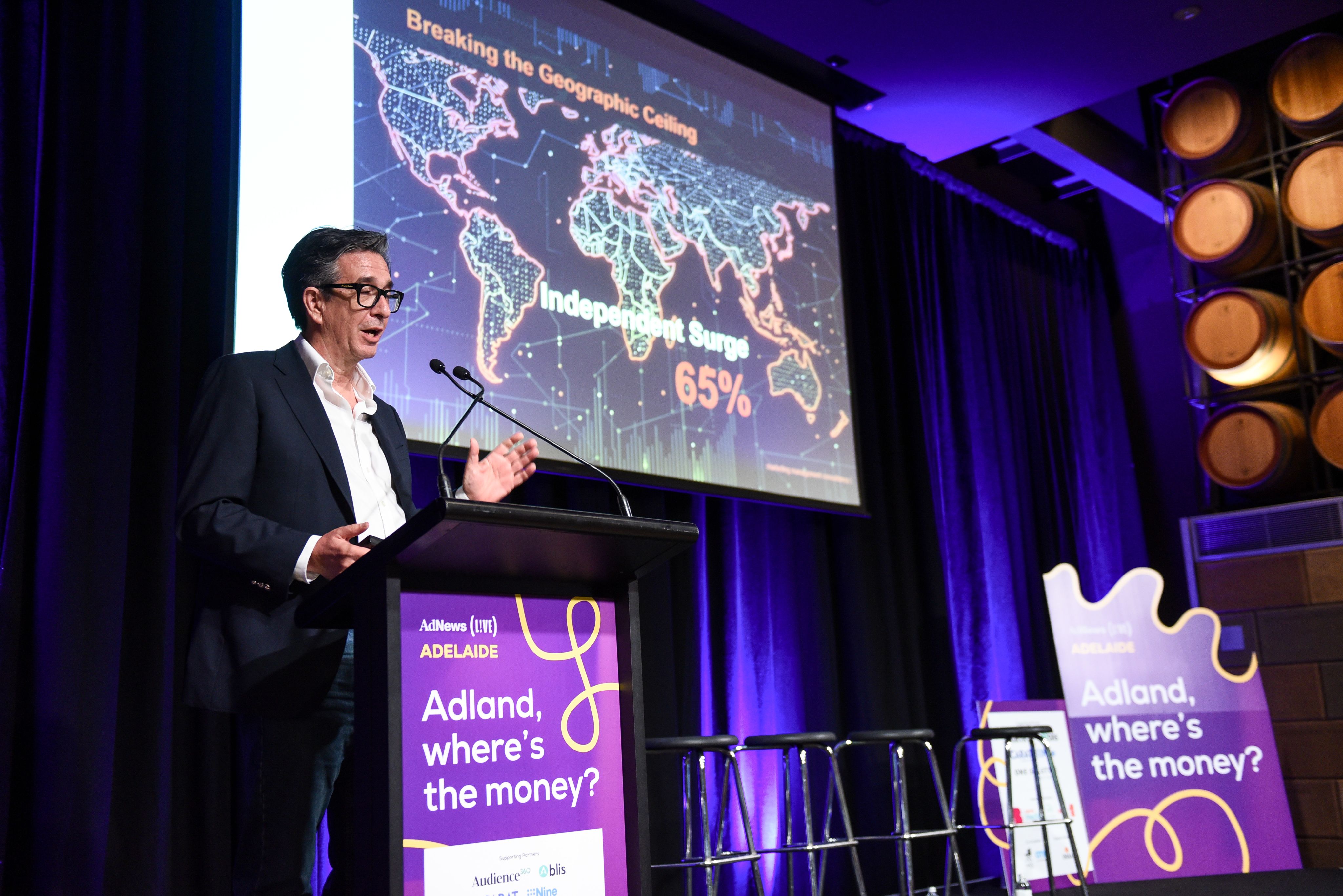
The Agency Squeeze: what’s up for pitch?
Trinity P3 founder and global CEO Darren Woolley
Darren Woolley’s data points to a structural shift that’s reshaping the agency market — and it’s happening quickly.
In 2025, 441 pitches were identified across Australia. Of those, 65% were awarded to independent agencies. On the surface, that sounds like a boom for indies.
But the reality underneath is more complex — and more brutal.
There are now 1,000+ agencies operating in Australia, with 650+ classified as independent. Which means being “indie” is no longer a differentiator. It’s the baseline.
At the same time, the market is splitting in two.
At the top end, large holding companies are consolidating into fewer, broader offerings — effectively building integrated, tech-led “one-stop shops” designed to service major clients at scale. At the other end, smaller agencies are growing rapidly by specialising.
What’s disappearing is the middle.
Woolley describes it as a “structural polarisation” or barbell effect — and it’s where the real risk sits. Generalist agencies that are “good at everything” are being squeezed out by platforms on one side and specialists on the other.
For marketers, this is already changing how agencies are selected. The traditional full-service model is increasingly being supplemented — or replaced — by multiple specialist partners. In fact, one of the fastest-growing areas of pitch activity is in social and content-led specialists, brought in after larger agencies fail to deliver depth in those areas.
This aligns directly with broader spend trends. As channels like social become more complex and commercially accountable, brands are no longer just buying media — they’re buying capability within platforms.
Where the data becomes particularly instructive is in where demand is actually coming from.
The most active pitch category in 2025 was food and product manufacturing (39 pitches), followed by a sharp increase in tourism and travel, which doubled year-on-year.
That has clear implications for South Australia. These are not abstract growth sectors — they are core to the state’s economy. The opportunity Woolley outlines is not to compete broadly, but to build deep, exportable expertise in categories where the state already has credibility.
And geography is no longer a constraint. He pointed to agencies generating 50%+ of revenue from overseas clients, including global tech brands, while operating out of Australia. Others specialising in fintech or challenger brands are expanding into Singapore, Indonesia, the US and UK, with triple-digit growth.
The pattern is clear: specialisation travels. Generalisation doesn’t.
For agencies — and by extension the marketers who appoint them — this shifts the definition of value. Woolley argues the industry has been too focused on inputs (capabilities, services) rather than outputs.
That shift is starting to show up commercially.
Clients are increasingly open to paying for thinking and performance, rather than time. Performance-based models are gaining traction, but only where agencies can clearly link their work to business outcomes.
At the same time, the cost narrative is changing. AI has rapidly moved from differentiator to expectation — effectively “table stakes”. Agencies positioning themselves on being cheaper or faster because of AI are already behind.
The opportunity is not cost reduction — it’s higher-value thinking enabled by automation.
Overlay that with the pitch environment itself, and another pressure emerges. Pitching is increasing in volume — more projects, more processes — but not necessarily improving in quality. For agencies, that means higher cost of acquisition. For marketers, it means more noise and less clarity.
The net effect is a more competitive, more fragmented, but also more specialised ecosystem.
For brands, the implication is clear. The agency model they grew up with — broad, retained, full-service — is being replaced by a more dynamic mix:
- Large platforms for scale and integration
- Specialists for depth and performance
And increasingly, success comes from how well those pieces are combined.
For agencies, the message is sharper. In a market where 65% of wins are going to independents but 650+ indies are competing, growth doesn’t come from being available — it comes from being distinct.
Because right now, the middle isn’t just under pressure.
It’s disappearing.
“The Australian auto market is the most competitive auto market in the world. We have almost 70 brands competing for just over 1 million vehicles a year.”
Sam Wight, Mitsubishi Motors General Manager Marketing & Corporate Affairs

The Marketing Playbook: a structural reset
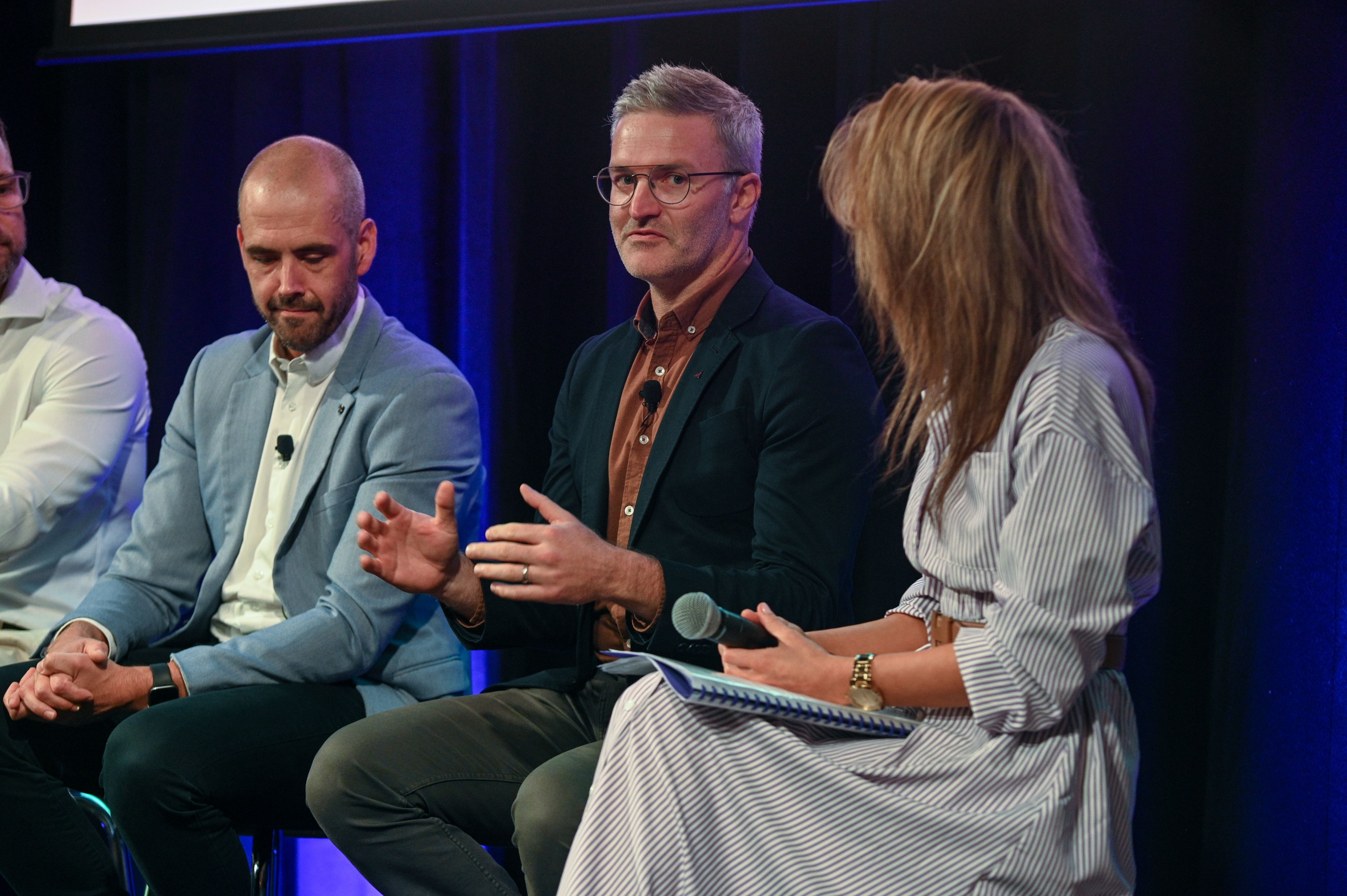
Mitsubishi Motors General Manager Marketing & Corporate Affairs Sam Wight, Adelaide University Chief Marketing and Communications Officer Benjamin Grindlay, Coopers Brand Manager Jessica Douglas and South Australian Tourism Commission Chief Marketing Officer Erik de Roos
In a flat growth market, marketing strategy is no longer about channel mix — it’s about choosing a side. Across higher education, tourism and automotive, the data shows the same structural shift: rising competition, tighter budgets and heavier scrutiny are forcing brands to decide whether to scale aggressively into growth markets or double down on sharp, defensible positioning at home.
The university arms race in South Australia isn’t theoretical — it’s structural, and it’s forcing fundamentally different marketing strategies. Benjamin Grindlay is building a new brand off the back of a merger of two 150+ year institutions. That scale play is deliberate: global top-tier universities require larger student bases to fund research, which drives rankings, talent attraction and long-term revenue. Adelaide University is prioritising international and interstate growth markets first, because that’s where marginal return is highest, even though ~70% of students remain domestic.
Flinders University, by contrast, is defending position through clarity. Bev Bury has doubled down on differentiation, sharpening the “Fearless” brand platform rather than diluting spend across channels. In a constrained budget environment, this is economic, not philosophical: speed to market, internal structure and team design directly impact marketing effectiveness as much as media spend.
Automotive marketing is under intense pressure, but also full of opportunity. Sam Wight explains that Australia is the most competitive car market globally, with ~70 brands competing for just over 1 million annual vehicle sales. Mitsubishi alone operates over 100 dealerships nationwide, giving the brand unparalleled reach into local markets and an ability to translate national campaigns into dealer-level conversions. In two years, 12 new entrants — largely Chinese EV brands — have compressed margins, but have also expanded the market and accelerated consumer interest in EVs. Mitsubishi has responded by aligning brand and retail spend closely with dealer performance, embedding finance-led conversion metrics, and using digital analytics to optimise customer acquisition and retention simultaneously. The approach is not defensive — it’s about turning scale, capability and data into commercial advantage, ensuring marketing investment directly drives revenue while positioning the brand in growth-ready segments like electrification and SUV markets.
Tourism, meanwhile, is measured not just by visitor numbers but by visitor spend and regional distribution. Erik de Roos highlights that South Australia has a resilient market and globally competitive offering. The sector invests in long-term brand building to strengthen consideration while tactical campaigns respond to immediate demand opportunities. Over five years, the sector has navigated challenges from bushfires, COVID, floods, drought and aviation disruption, but the response has been innovation-led, with targeted programs, digital campaigns and partnerships driving visitor growth and spending power across regions.
Across sectors, the pattern is consistent and data-backed:
- Growth is harder to find, so budgets follow proven revenue pools (international students, interstate demand, high-intent buyers, high-value tourism segments, profitable vehicle categories)
- Competition is rising, so brand clarity is becoming more valuable than sheer brand volume
- Scrutiny is increasing, so marketing is measured on commercial impact, not just activity
For marketers, this isn’t a channel shift — it’s a structural reset. Success goes to those who choose a side, invest with intent, and convert insight into measurable advantage.






“A lot of businesses are reducing the size of their data teams at a time when the fires are about to come on us.”
Claire Bryan, Carat Digital & Integration Partner

Regulation: the roadmap ahead
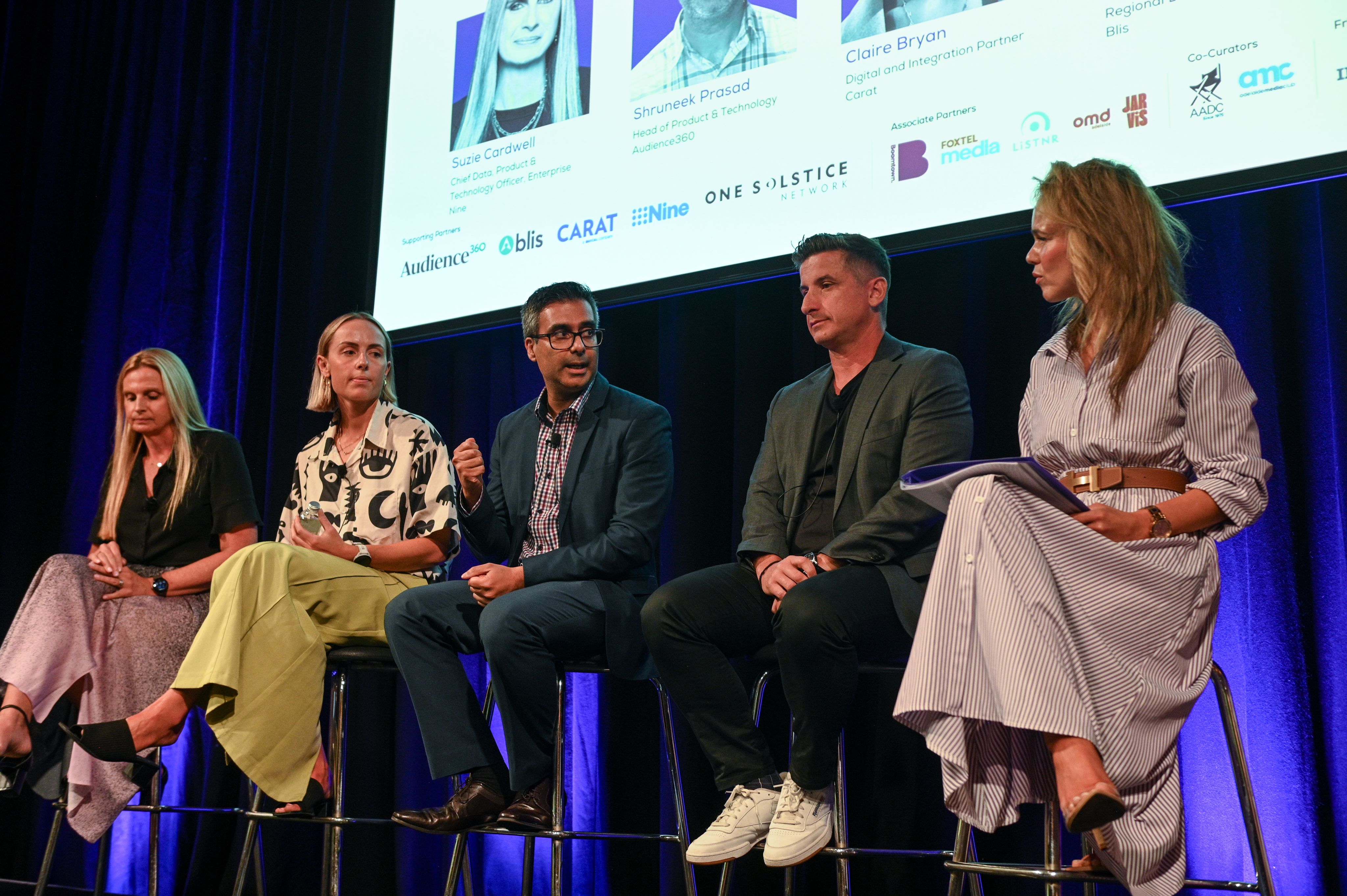
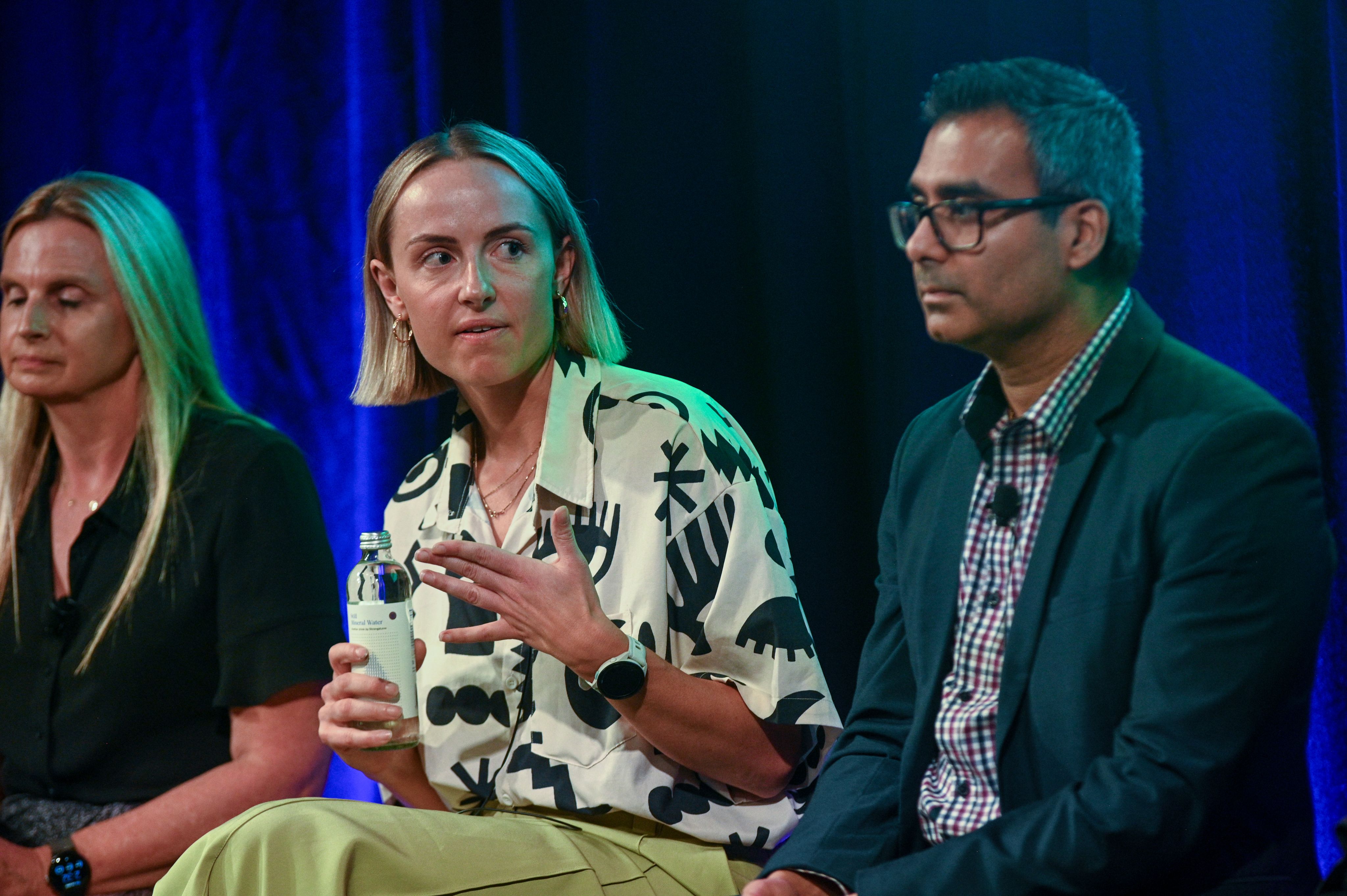
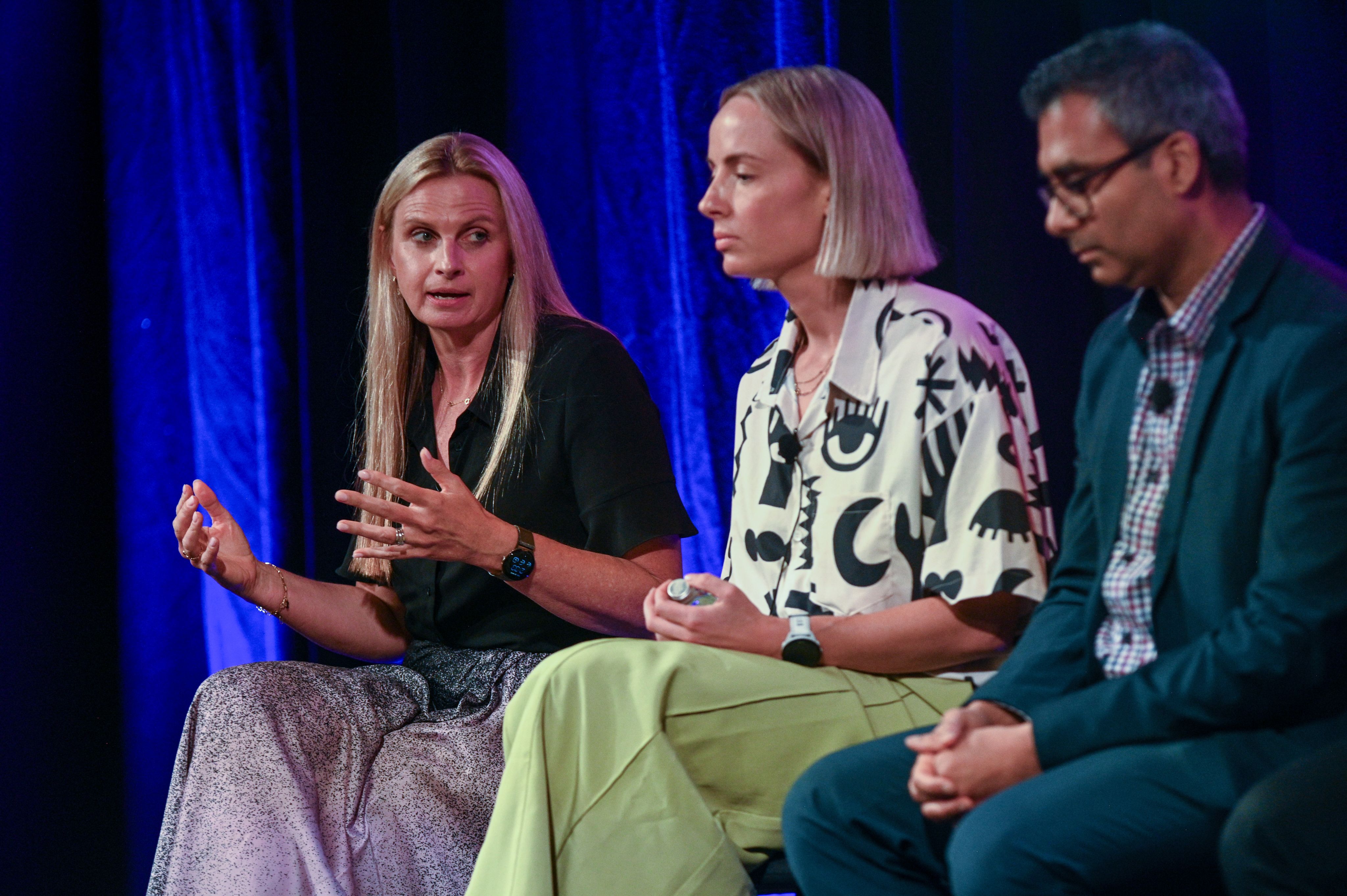
Nine Chief Data, Product & Technology Officer, Enterprise Suzie Cardwell, Audience360 Head of Product & Technology Shruneek Prasad, Carat Digital & Integration Partner Claire Bryan and Blis Regional Director ANZ Elias Psarologos
Across media, advertising and adtech, regulation is shifting from a background compliance issue to a core commercial constraint. Privacy reform, platform regulation and AI governance are converging at the same time the digital advertising model is already under pressure from cookie deprecation, rising acquisition costs and intensifying competition. The result is not incremental change — it’s a restructuring of how data-driven marketing operates.
The most immediate catalyst is Australia’s tranche two of privacy reform. According to Claire Bryan, the critical change is a legal one: businesses will no longer be able to collect data simply because consumers agreed to broad terms and conditions. Instead, organisations will need to prove that every data collection activity is “fair and reasonable.” That fundamentally shifts the burden of proof from the consumer to the company — a structural change for an industry built on large-scale behavioural data collection.
The economic implications are already visible in markets that have moved first. Suzie Cardwell pointed to the European experience under GDPR as a benchmark. Compliance infrastructure alone is estimated to cost ~€30,000 per year for small businesses, while large enterprises spend between €1 million and €10 million annually maintaining consent management, governance systems and security processes. Research published in 2025 also suggests measurable commercial impact: European businesses regulated by GDPR experienced an average 2% drop in sales and a 6% decline in profitability following implementation.
For media companies and marketers, that matters because the entire digital ecosystem relies on data to function. Cardwell emphasised that the ability to deliver personalised content, relevant advertising and customer acquisition strategies all depends on responsible data collection — meaning regulation must balance consumer protection with the economic reality that digital marketing infrastructure is data-dependent.
Operationally, the complexity of compliance is growing quickly. Bryan highlighted a major structural challenge emerging inside organisations: many companies are shrinking their data teams at exactly the moment regulation requires deeper oversight. That creates a capability gap just as companies face stricter obligations — particularly around data deletion rights, which will allow individuals to request removal of their personal information. For businesses with fragmented systems accumulated over a decade or more, proving that a single individual’s data has been fully erased across multiple databases becomes a major technical challenge.
At the same time, shifts in media investment patterns suggest the market is already adapting. Bryan pointed to industry data showing programmatic display advertising growing just 1.9% year-on-year, compared to video growth of roughly 30–36%, depending on the dataset. The disparity reflects a structural shift: programmatic display has historically relied heavily on third-party cookies, which are being phased out, while video and premium environments rely less on individual-level tracking.
The industry response has been a rapid pivot toward first-party data strategies. According to Elias Psarologos, brands and publishers are investing heavily in direct audience relationships, building opt-in datasets and experimenting with technologies such as data clean rooms to match advertiser and publisher datasets without directly sharing personal information. However, Psarologos also warned that many companies still lack clarity about how upcoming regulation will affect them, resulting in a wave of trial-and-error experimentation across the market.
For marketers, that shift also changes the economics of targeting. Instead of relying on highly granular one-to-one identification via cookies or device IDs, companies are increasingly exploring broader audience modelling approaches. Psarologos described this transition as a move from “one-to-one” targeting to “one-to-many” audience strategies, where advertisers focus on interest clusters and contextual signals rather than individual user profiles.
The rise of AI is accelerating this dynamic. According to Shruneek Prasad, the real value of AI inside organisations does not come from the machine learning models themselves, but from the unique datasets companies can use to train and refine them. That creates a new regulatory intersection: privacy law determines what data companies are allowed to collect, while AI governance will increasingly determine how that data can be used in automated decision-making systems.
Prasad argued that many organisations underestimate the scale of change required internally. Privacy compliance is not just a technology implementation — it requires a cultural shift around data governance, including staff training, organisational accountability and clearer processes around how information is collected, stored and activated. Even relatively minor mistakes can carry significant consequences. He cited a recent Lululemon spam case as an example where a simple oversight in email marketing compliance resulted in regulatory penalties.
Regulation is also reshaping the balance of power between publishers and technology platforms. Australia’s News Media Bargaining Code, introduced in 2021, has already delivered roughly $200 million per year in payments to local publishers, according to Bryan. The next phase of policy intervention could extend that framework further through a proposed News Incentive Scheme, which would introduce a levy on large digital platforms operating in Australia regardless of whether they carry news content directly.
For media organisations, the issue is increasingly tied to AI training data. As publishers integrate generative AI tools into their operations, they are also pushing for compensation when their content is used to train external models. Cardwell noted that while AI offers significant operational efficiencies and new audience experiences, it is also creating a new debate around data licensing and intellectual property rights.
Alongside privacy reform and platform regulation, the Australian government is also introducing restrictions on youth access to social media. The proposed policy will prohibit platforms from allowing users under 16 to access social media services and will restrict advertisers from profiling or targeting individuals under 18, with commercial impacts expected when advertising rules come into force in December 2026.
So far, the advertising market has not shown major disruption. According to Bryan, spending levels across major platforms have remained relatively stable year-on-year. However, the removal of younger audiences from the advertising ecosystem could reduce available inventory and ultimately increase cost per impression, particularly in social environments.
Across every topic discussed in the session — privacy, AI, targeting and platform regulation — the same pattern emerged. Data remains the core economic driver of digital marketing, but the conditions under which it can be collected, stored and activated are tightening rapidly.
“There are more buyers than ever, but there are fewer businesses. 10 years ago there were about 500 acquirers, today there's over 1500.”
Julia Vargiu, SI Global Director, Australia


Buyers market: who’s buying?
SI Global Director, Australia Julia Vargiu
Julia Vargiu framed the Australian agency market from the perspective of buyers, highlighting structural shifts redefining how agencies are valued.
SI Global has advised on more than 200 agency, consultancy and tech services transactions globally, completing a deal roughly every three to four weeks. Recent Australian deals include Ed, Red Jade, Wing, Frank Digital and Atomic 212. Trends show sellers increasingly choosing private equity-backed and independent buyers reflecting a shift in what buyers prioritise.
Digital marketing is projected to grow from $150 billion to $400 billion by 2030, roughly 17% compound annual growth. Half of that spend is mobile-first while retail media is scaling rapidly. Execution is increasingly driven by AI and data.
Deal activity slowed in 2023, recovered through early 2025 then paused mid-year due to macroeconomic uncertainty, cost of capital and geopolitics. A widening gap between seller expectations and buyer valuations is reshaping transactions with buyers prioritising scalable, revenue-adjacent capabilities over lifestyle or founder-dependent models.
The buyer universe has expanded dramatically from about 50 active buyers 20 years ago to roughly 1,500 globally today though the number of desirable targets has not kept pace. Buyers now include consultancies, tech companies, data platforms, private equity and independent agencies competing for the same capabilities. The market is now capability-driven rather than agency-driven.
Holding companies continue consolidating while independents and PE-backed groups fill capability gaps. Buyers prioritise AI, data, automation, scalable revenue channels and proprietary IP. In Australia domestic independent buyers are increasingly active though they typically pay lower multiples than global buyers.
Australian agencies remain technically sophisticated and globally competitive but clarity of value is critical. Agencies with under $2 million EBITDA often struggle to attract global buyers reinforcing the role of local independent acquirers.
Adelaide reflects these dynamics. The city hosts strong talent and capable operators but few agencies have meaningful scale. Transactions such as Atomic 212 acquiring KWB’s media arm demonstrate that clarity and specialisation — not complexity — facilitate acquisition. Sector positioning, particularly in defence, space, energy and advanced manufacturing, further strengthens attractiveness.













To sponsor AdNews Live, contact our sponsorship manager Amanda Wilson
M: 0416 772 674
amandawilson@yaffa.com.au



 Built with Shorthand